Section #1 - The Life of Abraham Lincoln
Chapter 71: Lincoln’s Long Journey Toward Black Equality

Abe’s judgment about slavery is clear by age nineteen after he witnesses it on his flatboat trip to New Orleans: “if slavery isn’t wrong, nothing is wrong.” But his beliefs about the possibility of Blacks making their way as citizens in American society evolve gradually.
At first he is quite certain it can never happen, given the negative racial stereo-types embedded over two centuries. This leads him as a young man to support Henry Clay’s failed colonization efforts to send those emancipated to Liberia.
His first-hand contacts with Blacks prior to the Civil War are minimal, and in the 1858 debates with Stephen Douglas, he awkwardly admits that the races are “different” and that Whites should probably enjoy the “superior position.” Like many moderates at the time, his conscience opposes enslavement, but his observations question full equality.
This changes, however, once the war breaks out and his daily contact with Black people increases. Within the White House, former slave Elizabeth Keckley becomes Mary’s seamstress and clothier, and freedman Peter Brown acts as the President’s butler. Outside he frequently mingles with Black soldiers and their shouts of “hurrah the Liberator” lift his spirits.
But it is his meetings with Black leaders at the White House that have the greatest impact on his convictions. On April 2, 1862, Bishop William Payne of the African Methodist Episcopal Church becomes only the second Black ever to meet a President in the White House. He memorializes the event as follows: “The president received and conversed with me as though I had been one of his intimate acquaintances or one of his friendly neighbors. I left him with a profound sense of his real greatness and of his fitness to rule a nation composed of almost all the races on the face of the globe.”
Others follow Payne: the intellectual Episcopal priest, Alexander Crummel; Reverends Chauncey Leonard, H. Parker Gloucester, and various other ministers all seeking Lincoln’s support for freedom and proper respect for Black soldiers.
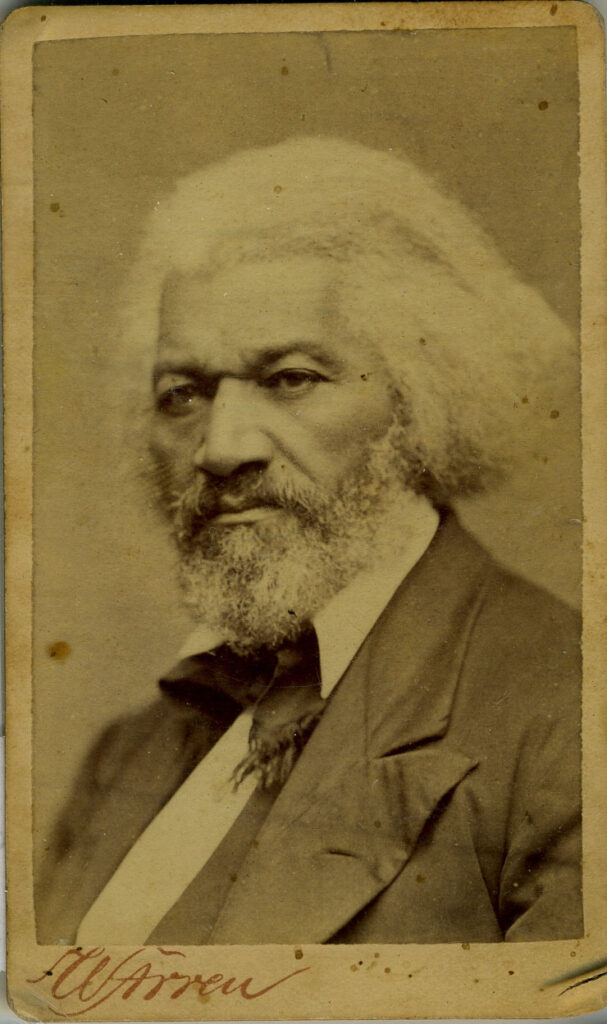
Of course the most significant interactions occur with Frederick Douglass. At first Douglass distrusts Abe, for his early support of colonization, then his promise at the First Inaugural to protect slavery in the South. However, this changes in 1863 with the Emancipation Proclamation, which pre-dates their three face to face encounters in Washington.
The first of these occurs on August 10, 1863 when Douglass — who has led the efforts to recruit Black soldiers (including two of his sons) — is immediately ushered into the Oval Office and greeted by Lincoln who says: “It’s good to see you, Mr. Douglass, I’ve read about you and know you, how can I help?” And he does so by equalizing pay for the Blacks, improving their weapons and supplies, and supporting advances in their ranks.
The second meeting is initiated by Lincoln who asks Douglass for more support among black soldiers to help ensure his re-election over the Peace Democrats.
Finally the famous Black leader attends the second Inaugural, where Abe introduces him as “my friend Fred Douglass” and has him seated next to him on the podium. He calls the speech “a sacred effort.”
Noone can know for sure the path Lincoln travels to arrive at the sense of equality he feels with Douglass and other Blacks, but it undoubtedly follows the first-hand encounters and experiences he has during the war.