Section #1 - The Life of Abraham Lincoln
Chapter 66: After the Maryland Outcome, Abe Issues His Emancipation Proclamation
January 1, 1863
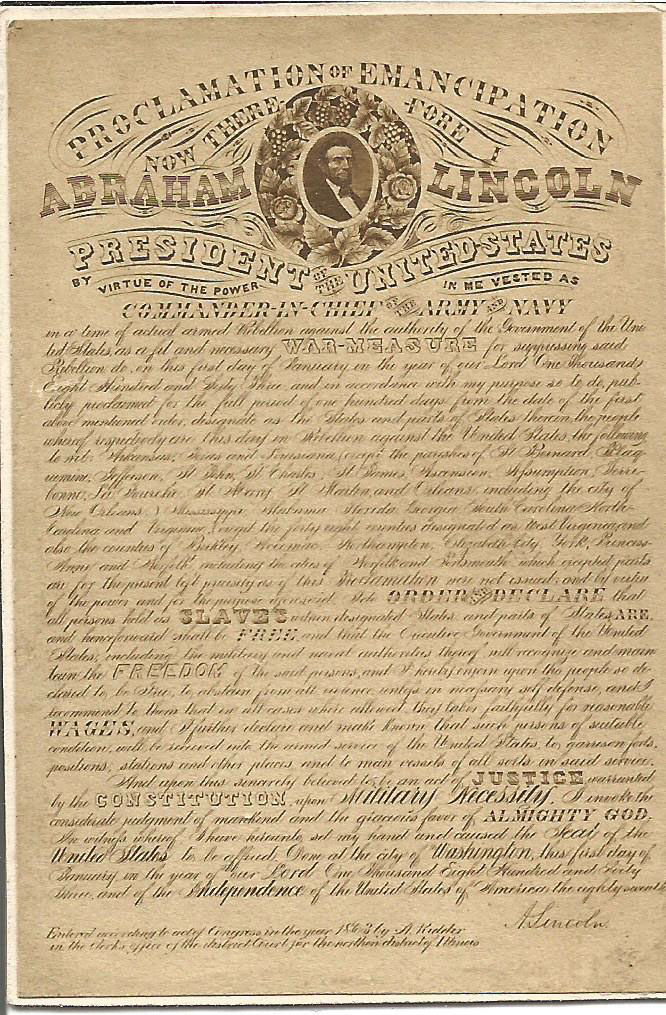
Lincoln seizes upon the hopeful news of Antietam to take one of the greatest risks to his presidency.
For some time his military men, and even Frederick Douglas, have been pointing out that the 4 million enslaved are a major asset to the South’s capacity to continue fighting the war. They work the fields to supply food and build much needed fortifications. There are even some Southern officers, including Lee, who suggest enlisting them as soldiers in exchange for their freedom.
By ordering their emancipation, Lincoln could upset the Confederate’s reliance on their Blacks overnight. But he knows that opposition to that move runs deep throughout the North.
His political fear is that such a move would alter the approved mission of the war from Saving the Union to Freeing the Slaves. A deeper emotional concern is that, once freed, the Blacks would flood into Northern towns and cities where history shows consistent efforts by Whites to oppose their presence.
After weighing the trade-offs, the President comes down on the side issuing an Executive Order, the Emancipation Proclamation. It is carefully crafted to reduce the opposition by freeing only those slaves in states that remain in rebellion on January 1, 1863. Omitting those in the border states of Delaware, Maryland, Kentucky and Missouri reinforces their neutral status, while also signaling freedom as a secondary consideration to winning on the battlefield.
Once the order takes effect, most black escapees are kept in the South at army camps as “contraband,” working to support the Union forces.