Section #1 - The Life of Abraham Lincoln
Chapter 35: Black Leader Frederick Douglass Searches for New Means to His End
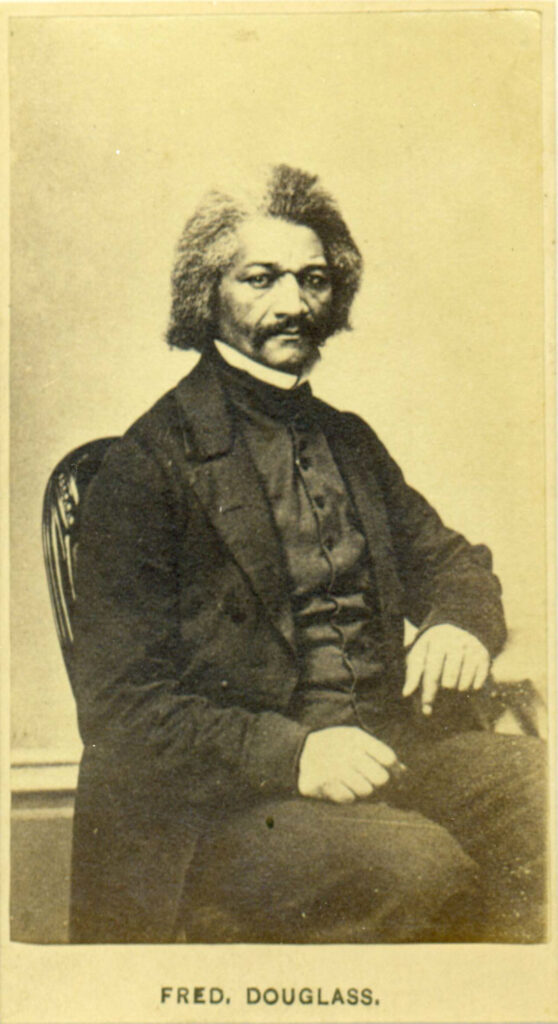
Another powerful force for freedom is Frederick Douglass. After a decade as one of Lloyd Garrison’s traveling lecturers, Douglass begins to drift away from believing that preaching will be sufficient to free the slaves.
In 1845 he publishes his autobiography recounting his years of captivity in Baltimore, the sense of agency won in his fistfight with a white overseer, and his daring escape disguised as a sailor to New York and then Massachusetts. From this point on he becomes a famous figure across America and Europe.
Douglass meets the abolitionist John Brown for the first time in 1847, an encounter that will lead twelve years later to involvement in the violent raid at Harper’s Ferry. His two year tour of Britain and Ireland adds to his celebrity, and upon returning home, he publishes his own paper, The North Star, which will soon merge with Gerrit Smith’s Liberty Party paper.
But it is Douglass’ intellect and talent as a writer and speaker that convinces many white leaders – eventually including Lincoln himself – of the capacity for Black people to assimilate into white society.