Section #1 - The Life of Abraham Lincoln
Chapter 21: Regional Tension Flares Up Around the Tariff
1828
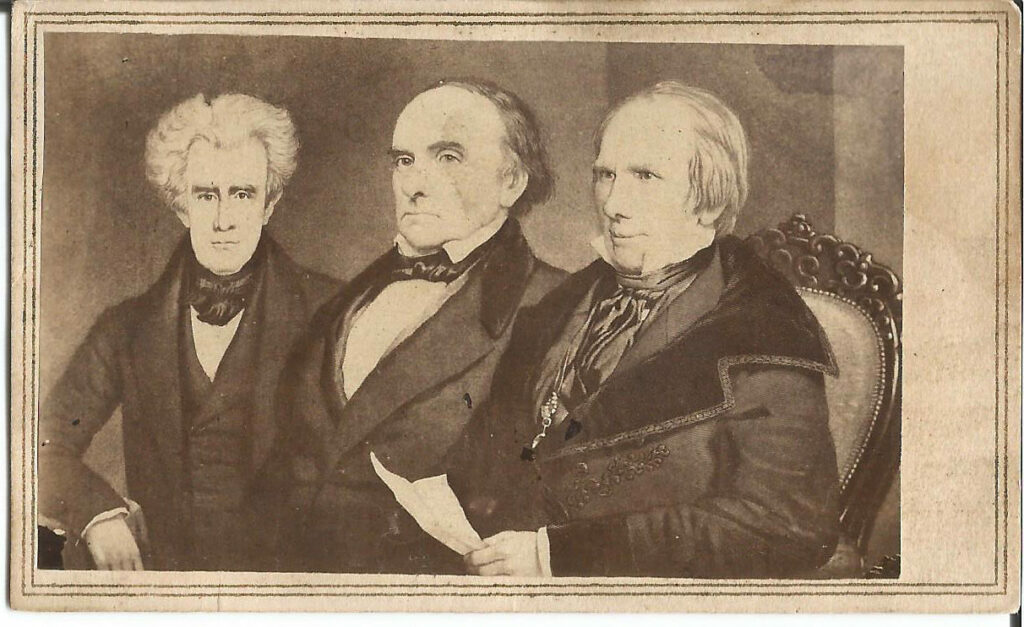
(CALHOUN, WEBSTER AND CLAY)

Still, slavery is not the only source of regional tension, and in 1832 the spotlight turns to an economic dispute over tariff rates.
With personal taxation forbidden, funding the federal government depends on collecting duties on commodities shipped to Europe and on finished goods then imported. Tariffs also serve another purpose, namely to support domestic manufacturing by keeping its prices competitive with foreign imports.
But according to Andrew Jackson’s sitting Vice-President, John C. Calhoun of South Carolina, recent increases in the rates are a direct threat to the profitability of the state’s cash crops, especially its exports of raw cotton. In turn he announces his intent to “nullify” the tariffs by ordering local custom houses not to collect them. This, he says, being a matter of the rights of his Sovereign State to protect itself against harm from Northern manufacturers.
The federal response to Calhoun’s threat is immediate, with President Andrew Jackson passing a Force Bill authorizing him to send federal troops to South Carolina to arrest any agents that fail to follow the law.
While this ends the “nullification” crisis, Calhoun resigns from the administration to become the leading proponent of Disunion on behalf of states’ rights.