Section #1 - The Life of Abraham Lincoln
Chapter 54: Meanwhile, the Republican Convention in Chicago Nominates Abe

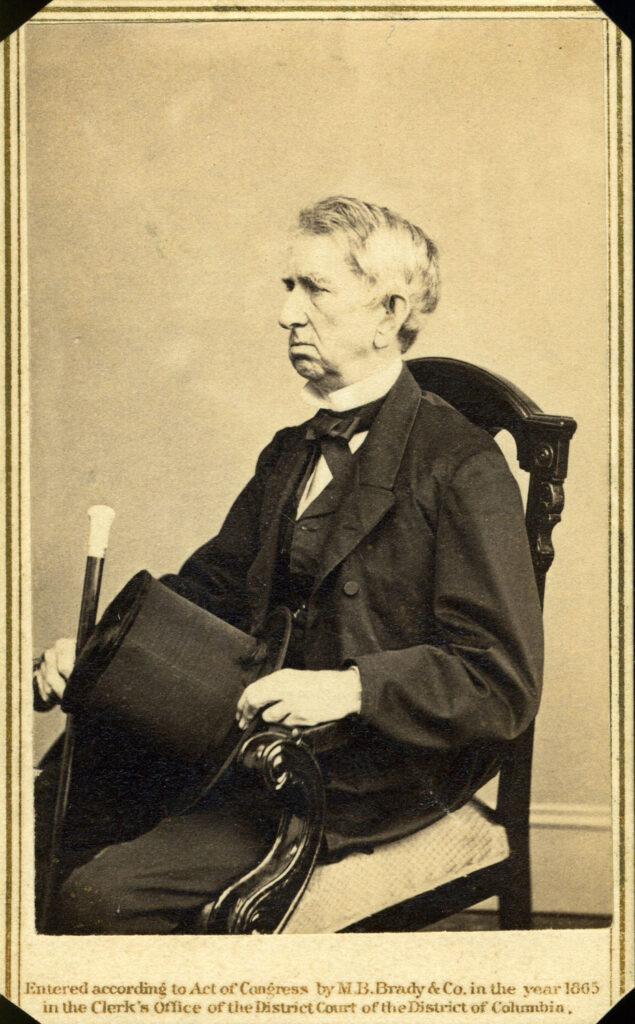
Like Douglas, New York Senator William Henry Seward arrives at the Republican conventions confident of nomination. But what he fails to understand is that his earlier “Irrepressible Conflict” address convinces many delegates that he has given up hope for saving the Union.
So while Seward leads on the first ballot with 173 votes, he is well short of the 303 needed to win. He adds 11 more in the second count only to find Abraham Lincoln jumping ahead to victory on the third casting.
Like Seward, Lincoln vows to ban slavery in the west, but his rhetoric on national unity is regarded as more moderate and hopeful than Seward’s.
Lincoln has also conducted a savvy campaign, including his pivotal February 1860 speech at the Cooper Union in New York. In this first audition before Republicans in the east, he overcomes his gangly appearance and Kentucky twang with a tightly reasoned argument that the Founders intended for slavery to vanish once the international trade ended in 1808. The following day, NY Tribune editor, Horace Greeley writes: “No man ever made such an impression on his first appeal to a New York audience.”
Lincoln’s convention tactics also give him the edge. It is held in his home state; his floor managers stack the public crowd of 10,000 with his vocal supporters; the halls display posters touting “Honest Abe” the railsplitter sharpening his ax for the White House; all helped along by several real or “iffy” promises of future Cabinet jobs which swing some votes.
Given that the Democrat party has already been cut in two, the Republicans leave the convention optimistic about the November election.