Section #1 - Lincoln’s Long Journey Home to Racial Equality
Chapter 22: The Washington Environment Change’s Lincoln’s Perspectives
For the next four years the family will live in DC, where Blacks make up 19% of the total population.
1860 Census Data
| Total Population | Free Blacks | Enslaved | % Black | |
|---|---|---|---|---|
| Washington | 75,080 | 311 | 0 | 0.1% |
| Springfield | 32,374 | 11,131 | 3,185 | 19.1 |
Within the White House itself, the household staff includes many freedmen and women. Their names and the stories of their relationships with Abe and Mary are captured four decades later by African-American chronicler John E. Washington in his 1942 history They Knew Lincoln.
Prominent among them are: William Slade, the White House Usher and butler; Elizabeth Keckley, Mary’s dressmaker and confidante; Solomon Johnson, a bodyguard, valet and barber who travels with Lincoln from Springfield; cook, Mary Dines, who prepares favorite dinners and also helps nurse the children through bouts of typhoid fever; and their offspring who become best friends of the Lincoln boys.
All comment that Lincoln is “blind to race and color,” treats them “like the white people in the house,” and “sympathizes with their past.” Washington concludes that “Lincoln saw in them an example of what freedom could accomplish.”
His interactions with Blacks also extend beyond the White House staff, to soldiers in the field and to a series of impressive visitors.
On April 2, 1862, Bishop William Payne of the African Methodist Episcopal Church becomes only the second Black ever to meet a President in the White House. He memorializes the event as follows:
“The president received and conversed with me as though I had been one of his intimate
acquaintances or one of his friendly neighbors. I left him with a profound sense of his real
greatness and of his fitness to rule a nation composed of almost all the races on the face
of the globe.”
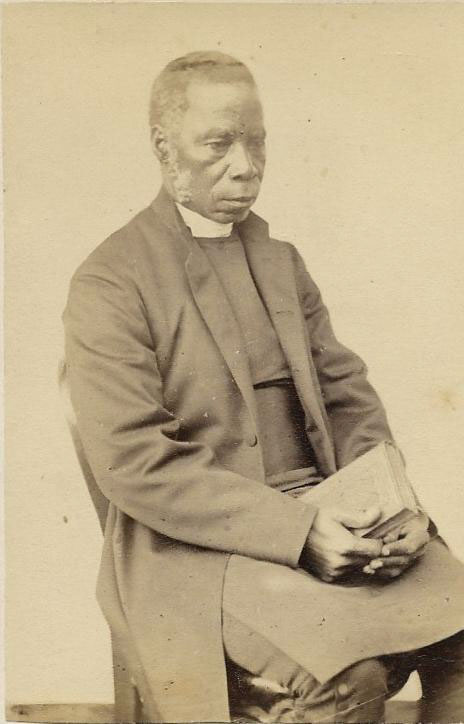
Fifteen days later he visits with the remarkable black scholar, Alexander Crummell, the first Black accepted at Yale before graduating from Cambridge University. As an Episcopal Priest, Crummell informs the President about his Pan-African movement, which includes an attempt to secure Christian converts in Liberia.
Other Episcopalian ministers such as Chauncey Leonard and H. Parker Gloucester appear, seeking Lincoln’s support for racial freedom, tolerance and respect.
In August 1862, the President meets with Robert Smalls whose fame traces to a daring escape with 15 other South Carolina slaves aboard the CSS Planter which he steams to a safe Union harbor at Hilton Head. Smalls moves Lincoln toward enlisting black soldiers by insisting on their loyalty and fighting capacity.