Section #1 - Lincoln’s Long Journey Home to Racial Equality
Chapter 11: The 1850 Compromise Avoids a Crisis
The furor is brought to a head in 1849 when the Territory of California is admitted to the Union as a designated Free State. Threats of secession are heard across the South, and Henry Clay is called upon to search for a quid pro quo similar to his 1820 solution in Missouri.
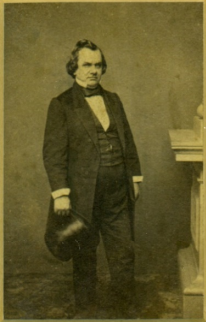
Clay crafts an Omnibus Bill that fails to pass given its all-in-one complexity, and hen hands the task off to the Democrat’s leader in Congress, Senator Stephen Douglas. He breaks the bill into pieces and is able to sell them.
The North gains California as a Free State. The South gets three things in return: (a) an extension of the Texas borders by some 70,000 square miles; (b) an updated Fugitive Slave Act requiring Northerners to help bounty hunters return run-aways; and (c) a promise to hold “Popular Sovereignty” elections to have local settlers decide on slavery in the Arizona and New Mexico territories.