Section #1 - The Napoleonic Wars: 1803–1815
Appendix
Napoleon’s Rise And Fall
| Year | Historical Event / Milestone |
|---|---|
| 1792 | 1st Coalition War vs. Austria and Prussia (end 1797) |
| 1793 | Siege of Toulon (southern France) – Napoleon wins first fame |
| 1795 | N quells pro-monarchy insurrection in Paris |
| 1797 | First Italian campaign (victories at Lodi and Arcola) |
| 1798 | Expedition to Egypt and Syria |
| 1799 | N seizes power in Paris as First Consul of the Republic |
| 2nd Coalition vs. Russia, UK, Austria, Naples, Vatican, etc (end 1802) | |
| 1800 | Second Italian campaign (victory at Marengo (nw Italy) over Austria) |
| Spain trades Louisiana Territory back to France for Tuscan land | |
| France ends its Quasi-War with the US | |
| 1802 | Treaty of Amiens ends war with Britain (for one year) |
| Napoleon expanding his political power over France | |
| 1803 | Britain declares war on France |
| 1804 | 3rd Coalition vs. Britain, Austria, Prussia |
| 1805 | Napoleon crowns himself Emperor of France |
| 1805 | British defeat French invasion fleet at Trafalgar |
| Battle of the Three Kings at Austerlitz – N beats Austria and Russia | |
| 1806 | 4th Coalition vs. Prussia and Russia |
| Battle of Jena-Auerstedt – N beats Prussia | |
| 1807 | Battle of Friedland – N beats Russia |
| Peninsular campaign – N beats Portugal | |
| 1808 | Napoleon turns on ally Spain, Joseph Napoleon on throne |
| 1809 | 5th Coalition vs. Austria and Britain |
| Battle of Wagram – Napoleon beats Austria, occupies Vienna | |
| Napoleon divorces Josephine; marries Marie-Louisa of Austria seeking an heir | |
| 1810 | Napoleon and France rule the European continent |
| 1811 | Napoleon and France rule the European continent |
| March 21: His one legitimate child, known from birth in 1811 as “King of Rome,” lives to age 21 before dying of tuberculosis | |
| 1812 | July 22: French loss at Battle of Salamanca; Wellesley hero in Spain |
| July 24: Napoleon crosses into Russia | |
| Sept 7: Borodino | |
| Oct 19: Napoleon leaves Moscow and begins retreat | |
| Dec 14: Recrosses into France | |
| Dec 30: Prussia withdraws from French alliance | |
| 1813 | Mar 16: Prussia declares war on France |
| April 13: N initiates German campaign | |
| May 2: N victory at Lützen | |
| May 20-21: N victory at Bautzen | |
| June 4: N signs temporary armistice (last til Aug. 13) | |
| Austria joins coalition vs. N | |
| Aug 26-27: N wins at Dresden | |
| June 21: Battle of Vittoria with French driven out of Spain | |
| Oct 16-19: N suffers a crushing loss at the Battle of Leipzig | |
| Dec 11: Joseph Bonaparte abdicates throne of Spain | |
| 1814 | Feb 10-14: Five Days Campaign west of Paris – brilliant Napoleon wins, but futile |
| March 30: Allies occupy Paris | |
| April 14: Louis XVIII placed on French throne | |
| May 30: Treaty of Paris ends war; Napoleon to Elba 10 miles from Italy | |
| September: Congress of Vienna convenes | |
| 1815 | March 1: Napoleon escapes Elba and returns to France |
| June 18: The Seventh Coalition defeats N at Waterloo | |
| June 22 – July 7: His 4-year-old son reigns for 15 days as Napoleon II | |
| July 22: N surrenders to British | |
| December: N is exiled to Island of St. Helena, 5,000 mi from France | |
| 1821 | May 5: Napoleon dies, presumably of stomach cancer |
| 1840 | December 15: His body is reburied in Paris under the Golden Dome of Les Invalides, with permission of the British |
Photo Gallery
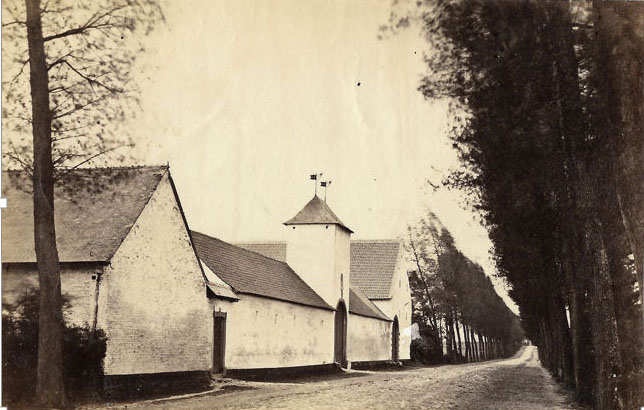
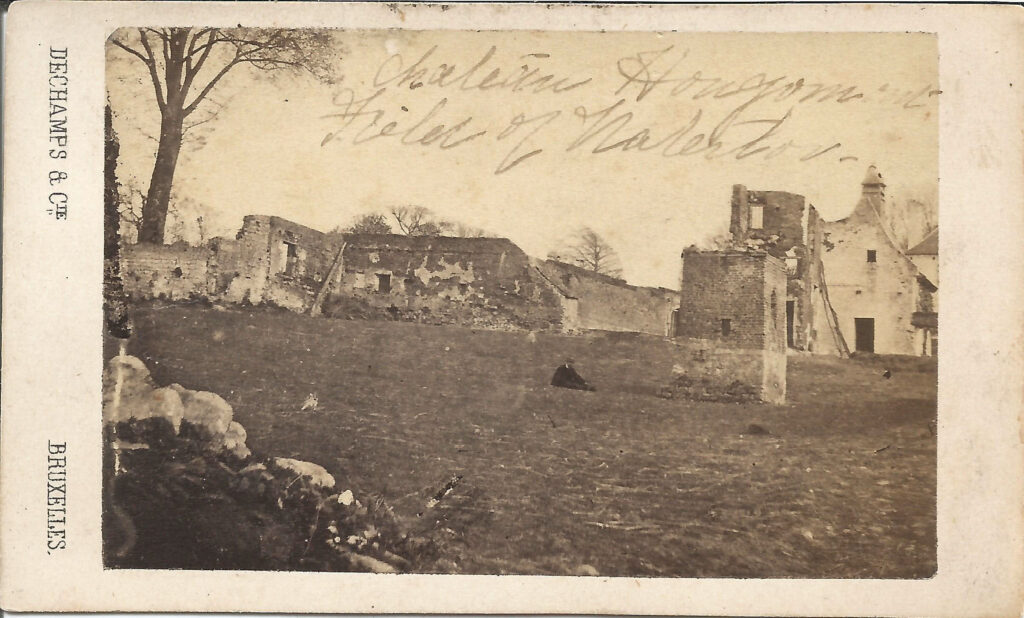
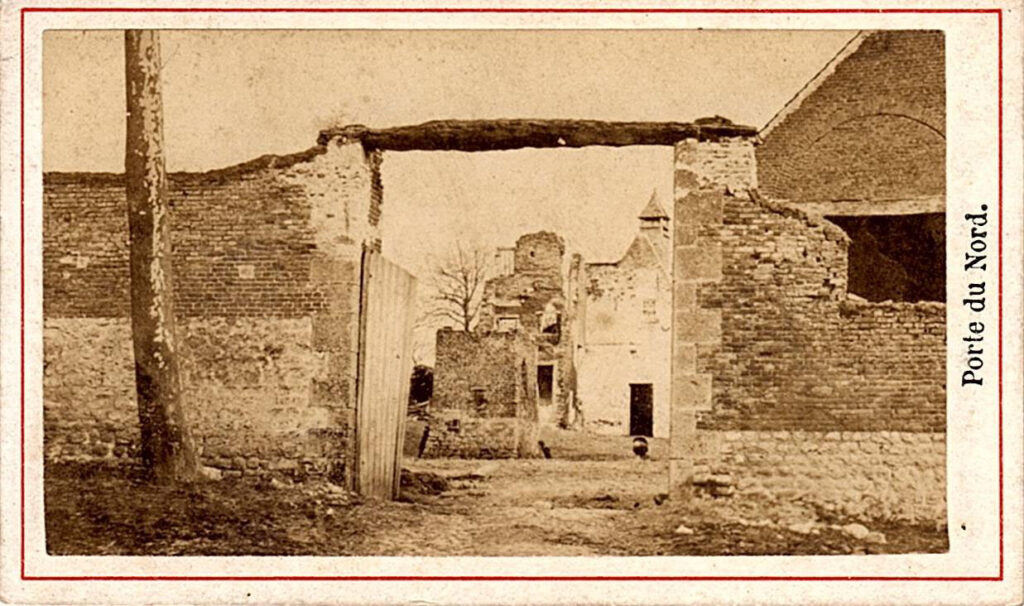
On Napoleon’s left flank is the crucial Chateau Hougoumont and its North Gate.
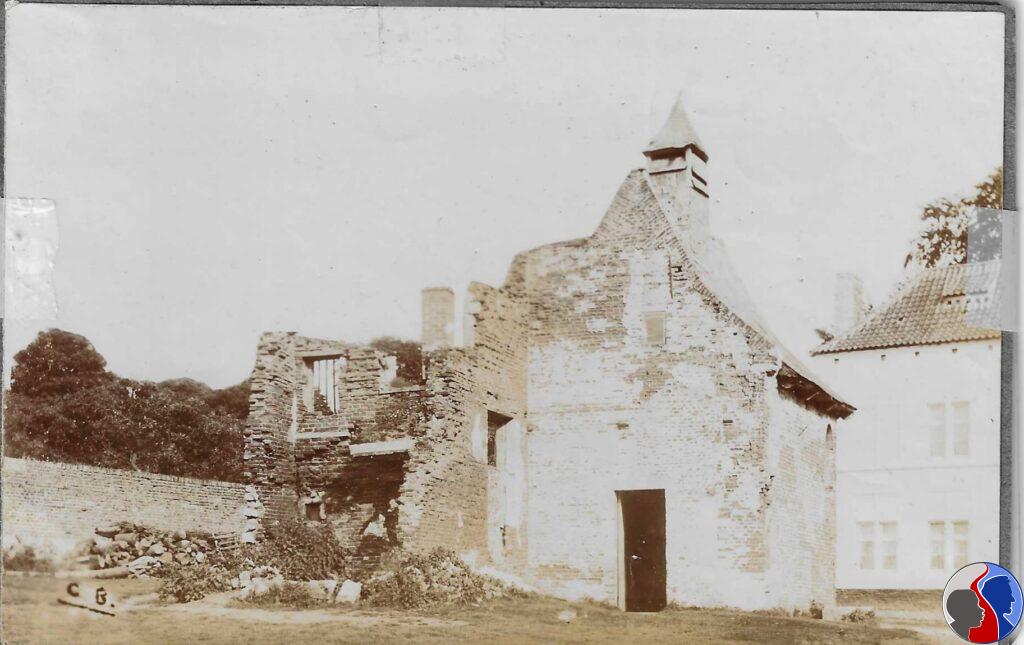

The ruined chapel with Hougoumont and the overall interior.



King William II of the Netherlands who dies there.


The ascending Emperor and the defeated General.


from the Arc de Triomphe down the Champs-Elysees to Place de la Concord before swinging across
the Seine to the military memorial site at Les Invalides. He is entombed there in a red sarcophagus
under the dome of St. Jerome’s Chapel. To this day, over one million people visit the tomb each year.